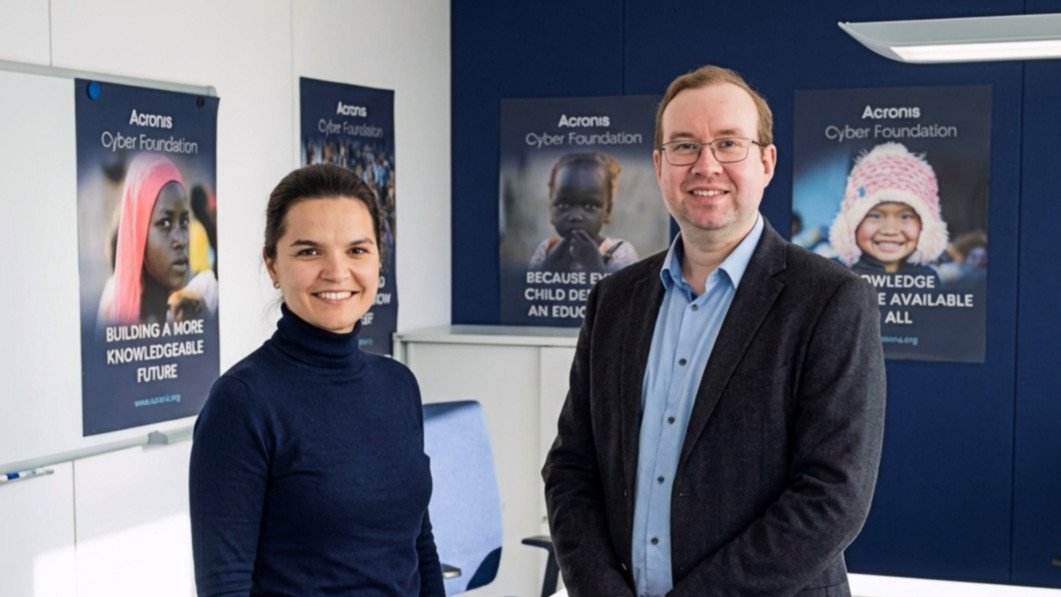
Last week I spent the day with the Acronis Foundation team discussing a potential partnership focused on expanding access to high-quality computer science education in emerging markets.
Our conversation centred on one key question: how do you scale quality, not just access?
In many education initiatives, infrastructure is treated as the main challenge.
In reality, buildings, devices, and connectivity are only part of the equation.
The more complex issue is ensuring consistently strong teaching and rigorous content at scale.
Our shared view is that students in developing regions should not receive simplified or "watered-down" curricula.
With the right systems in place, the same depth of algorithmic thinking and problem-solving taught at top institutions can be delivered sustainably in resource-constrained environments.
We also discussed the role of AI not as an add-on, but as educational infrastructure — supporting teachers with feedback, personalisation, and assessment, while allowing them to focus on mentorship and higher-level instruction.
The next step is moving into execution, starting with pilot regions in Eastern Europe and Southeast Asia.
It's an ambitious challenge, but one with the potential for long-term, meaningful impact.